/ Stars that died in 2023

Tuesday, January 4, 2011

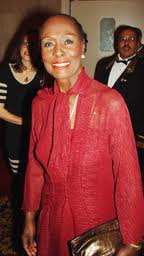
Shirley Verrett, American operatic mezzo-soprano, died from heart failure.she was , 79


Shirley Verrett [1] was an American operatic mezzo-soprano who successfully transitioned into sopranoroles i.e. soprano sfogato. Verrett enjoyed great fame from the late 1960s through the 1990s, particularly well-known for singing the works of Verdi and Donizetti.


(May 31, 1931 – November 5, 2010)
 
Born into an African-American family of devout Seventh-day Adventists in New Orleans, Louisiana, Verrett was raised in Los Angeles, California. She sang in church and showed early musical abilities,[2] but initially a singing career was frowned upon by her family. Later Verrett went on to study with Anna Fitziu and with Marion Szekely Freschl at the Juilliard School in New York. In 1961 she won theMetropolitan Opera National Council Auditions.

In 1957, Verrett made her operatic debut in Britten's The Rape of Lucretia. In 1958, she made her New York City Opera debut as Irina in Kurt Weill's Lost in the Stars. In 1959, she made her European debut in Cologne, Germany in Nabokov's Rasputins Tod. In 1962, she received critical acclaim for her Carmen in Spoleto, and repeated the role at the Bolshoi Theatre in 1963, and at the NY City Opera in 1964 (oppositeRichard Cassilly and Norman Treigle). Verrett first appeared at the Royal Opera HouseCovent Garden in 1966 as Ulrica in Un ballo in maschera.
She appeared in the first concert ever televised from Lincoln Center in 1962,[3] and also appeared that year in the first of the Leonard Bernstein Young People's Concerts ever televised from that venue, in what is now Avery Fisher Hall.
She made her debut at the Metropolitan Opera in 1968, with Carmen, and at La Scala in 1969 in Samson and Dalila. Verrett's mezzo roles included Cassandra and Didon (Berlioz's Les Troyens)-including the Met premiere, when she sang both roles in the same performance,Giuseppe Verdi's Ulrica, Amneris, Eboli, Azucena, Saint-Saëns' Dalila, Donizetti's Elisabetta I in "Maria Stuarda", Leonora in La favorita,Gluck's Orpheus, and Rossini's Neocles (L'assedio di Corinto) and Sinaide in Moïse. Many of these roles were recorded, either professionally or privately.
Beginning in the late 1970s she began to tackle soprano roles, including Selika in L'Africaine, Judith in Bartok's Bluebeard's Castle, Lady Macbeth Macbeth , Madame Lidoine in Poulenc's Dialogues of the Carmelites (Met1977), ToscaNorma ( from Boston 1976 till Messina 1989), Aida (Boston 1980 and 1989), Desdemona (Otello) (1981), Leonore (Fidelio) (Met 1983), Iphigénie (1984-85), Alceste (1985), Médée(Cherubini) (1986).. Her Tosca was televised by PBS on Live from the Met in December of 1978, just six days before Christmas. She sang the role opposite the Cavaradossi of Luciano Pavarotti.[4]
In 1990, Verrett sang Dido in Les Troyens at the inauguration of the Opéra Bastille in Paris, and added a new role at her repertoire: Santuzza in Cavalleria rusticana in Sienna. In 1994, she made her Broadway debut in the Tony Award-winning revival of Rodgers and Hammerstein'sCarousel at Lincoln Center's Vivian Beaumont Theater, playing Nettie Fowler.
In 1996 Verrett joined the faculty of the University of Michigan School of Music, Theatre & Dance as a Professor of Voice and the James Earl Jones University Professor of Music. The preceding year at the National Opera Association Gala Banquet and Concert honoring Mattiwilda DobbsTodd DuncanCamilla Williams and Robert McFerrin, Verrett said: "I'm always so happy when I can speak to young people because I remember those who were kind to me that didn't need to be. The first reason I came tonight was for the honorees because I needed to say this. The second reason I came was for you, the youth. These great people here were the trailblazers for me. I hope in my own way I did something to help your generation, and that you will help the next. This is the way it's supposed to be. You just keep passing that baton on!"[5]

In 2003, Shirley Verrett published a memoir, I Never Walked Alone (ISBN 0-471-20991-0), in which she spoke frankly about the racism she encountered as a black person in the American classical music world. When the conductor Leopold Stokowski invited her to sing with theHouston Symphony in the early 1960s, he had to rescind his invitation when the orchestra board refused to accept a black soloist. Stokowski later made amends by giving her a prestigious date with the much better known Philadelphia Orchestra.[6]

Verrett died in Ann Arbor, Michigan on November 5, 2010 of heart failure after a long illness.[7] She was 79 years old.

To see more of who died in 2010 click here

Sparky Anderson, American baseball player and manager (Cincinnati Reds, Detroit Tigers), member of Baseball Hall of Fame, died from complications of dementia he was , 76


George Lee "Sparky" Anderson was aMajor League Baseball manager died from complications of dementia he was , 76. He managed the National League's Cincinnati Redsto the 1975 and 1976 championships, then added a third title in 1984 with the Detroit Tigers of the American League. He was the first manager to win the World Series in both leagues. His 2,194 career wins are the sixth most for a manager in Major League history. He was named American League Manager of the Year in 1984 and 1987. Anderson was elected to the Baseball Hall of Fame in 2000.
 (February 22, 1934 – November 4, 2010)
Anderson was born in Bridgewater, South Dakota, on February 22, 1934. He moved to Los Angeles when he was eight.[1] He was a batboy for the USC Trojans.[1] He attended Susan Miller Dorsey High School in Los Angeles, California. Upon graduating, he was signed by the Brooklyn Dodgers as an amateur free agent in1953.[2] Sparky's American Legion Team won the 1951 National Championship, which was played in Brigg's Stadium (Tiger Stadium) in Detroit.


Playing career
Anderson began his playing career with the Santa Barbara Dodgers of the class-CCalifornia League, where he was primarily used as a shortstop.[3] In 1954, he was moved up to the class-A Pueblo Dodgers of the Western League and was moved to second base, where he played the rest of his career.[3]
In 1955, Anderson was moved another step up the minor league ladder, playing for the Double-A Fort Worth Cats of the Texas League. A radio announcer gave him the nickname "Sparky" in 1955 for his feisty play.[4] In 1956, he moved up once more, this time to the Triple-A Montreal Royals of the International League. In 1957, he was assigned to the Los Angeles Angels of the open-classification Pacific Coast League. The next season, after the Dodgers' move to Los Angeles, he returned to Montreal.[3]
After five minor league seasons without appearing in a Dodger uniform at the MLB level, he was traded to the Philadelphia Phillies on December 23, 1958 for three players, including outfielder Rip Repulski.[2] The Phillies gave Anderson their starting second base job, and he spent what would be his one full season in the major leagues in 1959. However, he batted only .218 in 152 games, with no home runs and 34 runs batted in, and returned to the minor leagues for the remainder of his playing career.
He played the next four seasons with the Triple-A Toronto Maple Leafs in the International League,[3] where Leafs owner Jack Kent Cookespotted Anderson's leadership qualities and encouraged him to pursue a career in managing.

Minor leagues

In 1964, at the age of 30, Anderson accepted Cooke's offer to manage the Leafs. He later handled minor league clubs at the Class A and Double-A levels, including a season (1968) in the Reds' minor league system.
During this period, he managed a pennant winner in four consecutive seasons: 1965 with the Rock Hill Cardinals of the Western Carolinas League, 1966 with the St. Petersburg Cardinals of the Florida State League, 1967 with the Modesto Reds of the California League and 1968 with the Asheville Tourists of the Southern League. It was during the 1966 season that Sparky's club lost to Miami 4–3 in 29 innings, which remains the longest pro game played (by innings) without interruption.[5]
He made his way back to the majors in 1969 as the third-base coach of the San Diego Padres during their maiden season in the National League. Just after the 1969 season ended, California Angels manager Lefty Phillips, who as a Dodger scout had signed the teenaged Anderson to his first professional contract[6], named Anderson to his 1970 coaching staff.

Cincinnati Reds

"Sparky Who?"

But within days of being hired in Anaheim, he was offered the opportunity to succeed Dave Bristol as manager of the Reds. His appointment reunited Anderson with Reds' general manager Bob Howsam, who had hired him as a minor-league skipper in the St. Louis Cardinals and Cincinnati organizations. Anderson was named the Reds manager on October 8, 1969. Since he was a relative unknown in the sports world, headlines on the day after his hiring read "Sparky Who?"[7] Nonetheless, Anderson led the Reds to 102 wins and the National Leaguepennant in 1970,[8] although they lost the 1970 World Series in five games to the Baltimore Orioles. It was during this season that the Reds came to be widely known as The Big Red Machine, a nickname they would carry throughout Anderson's tenure.

The Big Red Machine

After an injury-plagued 1971 season in which the team finished fifth,[8] the Reds came back and won another pennant under Anderson in 1972, beating the Pittsburgh Pirates in the NLCS, but lost to the Oakland Athletics in the World Series. They took the National League Westdivision title again in 1973, but lost to the New York Mets in the NLCS.
After finishing a close second to the Los Angeles Dodgers in 1974, in 1975 the Reds blew the division open by winning 108 games. They swept the National League Championship Series and then edged the Boston Red Sox in a drama-filled, seven-game World Series. They repeated in 1976 by winning 102 games and ultimately sweeping the New York Yankees in the Series. Over the course of these two seasons, Anderson's Reds compiled an astounding 14–3 record in postseason play against the Pirates, Phillies, Red Sox and Yankees, winning their last eight in a row in the postseason after triumphing against the Red Sox in Game 7 of the 1975 World Series, and then winning seven straight games in the 1976 postseason.
During this time, Anderson became known as "Captain Hook" for his penchant for taking out a starting pitcher at the first sign of weakness and going to his bullpen,[4][9] relying heavily on closers Will McEnaney and Rawly Eastwick.
When the aging Reds finished second to the Dodgers in each of the next two seasons, Anderson was fired on November 27, 1978[9] by general manager Dick Wagner, who had taken over for Howsam a year earlier.[1] Wagner had wanted to "shake up" the Reds' coaching staff, to which Anderson objected, leading to his dismissal as well.[9]
Under new manager John McNamara, the Reds won the division title again in 1979, but lost three straight to the Pittsburgh Pirates in theLeague Championship Series. They would not make the playoffs again until they won the World Series in 1990 by sweeping the heavily favored Oakland A's.

Detroit Tigers

Anderson moved on to the young Detroit Tigers after being hired as their new manager on June 14, 1979. The Tigers became a winning club almost immediately, finishing above .500 in each of Sparky's first three full seasons, but did not get into contention until 1983, when they won 92 games and finished second to the Baltimore Orioles in the American League East.
In 1984, Detroit opened the season 35–5 (a major league record) and breezed to a 104–58 record (a franchise record for wins). On September 23, Anderson became the first manager to win 100 games with two different teams.[5] They swept the Kansas City Royals in the American League Championship Series (ALCS) and then beat the San Diego Padres in five games in the World Series for Anderson's third world title. After the season, Anderson won the first of his two Manager of the Year Awards with the Tigers.[4]
Anderson's Tigers finished in third place in both 1985 and 1986. With a 9–5 win over the Milwaukee Brewers on July 29, 1986, Anderson became the first to achieve 600 career wins as a manager in both the American and National Leagues.[5]
Anderson led the Tigers to the majors' best record in 1987, but the team was upset in the ALCS by the Minnesota Twins. He won his second Manager of the Year Award that year.[4] After contending again in 1988 (finishing second to Boston by one game in the AL East), the team collapsed a year later, losing a startling 103 games. During that 1989 season, Anderson took a month-long leave of absence from the team as the stress of losing wore on him. First base coach Dick Tracewski managed the team in the interim.[10]
In 1991, the Tigers finished last in batting average, first in batting strikeouts and near the bottom of the league in most pitching categories, but still led their division in late August before settling for a second-place finish behind the rival Toronto Blue Jays.
During his managerial career, Anderson was known to heap lavish praise on his ballplayers when talking to the media. He declared Kirk Gibson "the next Mickey Mantle," which he later acknowledged may have put too much pressure on Gibson early in his career. He said Mike Laga, who played for him in 1984, would "make us forget every power hitter who ever lived."[11] He also said Johnny Bench (who played for him in Cincinnati) "will never throw a baseball as hard as Mike Heath" (a catcher who played for him in Detroit).

Anderson retired from managing on October 2, 1995,[5] reportedly disillusioned with the state of the league following the 1994 strike that had also delayed the beginning of the 1995 season. It is widely believed that Anderson was pushed into retirement by the Tigers, who were unhappy that Sparky refused to manage replacement players during spring training in 1995. In an interview on Detroit's WJR radio after his retirement, Anderson said he had told his wife that season, "If this is what the game has become, it don't need me no more."
He finished with a lifetime record of 2,194–1,834, for a .545 percentage and the sixth most wins for a Major League manager.[1] He spent the larger portion of his career managing the Tigers (1970–78 with the Reds, 1979–95 with the Tigers), but he won two World Series with the Reds and one with the Tigers.

[edit]Post-managerial work

Both during his tenure with the Tigers, and for a time thereafter, Anderson did some television work as a baseball commentator. From 1979 to1986 (with the exception of 1984 of course), Anderson was often paired with Vin Scully and later Jack Buck on CBS Radio's coverage of the World Series. From 1996 to 1998, he was a color analyst for the Anaheim Angels' cable television broadcasts.
While still in Detroit, Sparky founded the charitable organization CATCH (Caring Athletes Teamed for Children's and Henry Ford hospitals) in 1987. He continued to support and participate in the charity well into his retirement.[12]

Honors

Anderson was elected to the Baseball Hall of Fame as a manager in 2000. Although he managed 17 seasons in Detroit and just 9 seasons in Cincinnati, his Hall of Fame plaque has him wearing a Cincinnati Reds uniform. He chose to wear the Reds cap at his induction in honor of former GM Bob Howsam, who gave Anderson his first chance at a major-league managing job.[1] Before his induction, Anderson had refused to go inside the Hall because he felt unworthy, saying "I didn't ever want to go into the most precious place in the world unless I belonged."[4]In his acceptance speech he gave a lot of credit to his players, saying there were two kinds of managers, "One, it ain't very smart. He gets bad players, loses games and gets fired. There was somebody like me that I was a genius. I got good players, stayed out of the way, let 'em win a lot, and then just hung around for 26 years."[1] He was very proud of his Hall induction, "I never wore a World Series ring ... I will wear this ring until I die."[1]
Anderson was also inducted into the Cincinnati Reds Hall of Fame the same year. On May 28, 2005, during pre-game ceremonies inCincinnati, Anderson's jersey number, #10, was retired by the Reds. A day in Anderson's honor was also held at Detroit's Comerica Parkduring the 2000 season. His number with the Detroit Tigers, #11, has been inactive since he retired in 1995, but has not been formally retired.
On June 17, 2006, Anderson's number was retired by the Fort Worth Cats, for whom Anderson had played in 1955.[13] In 2007, Anderson was elected to the Canadian Baseball Hall of Fame.

Anderson was the first manager to win a World Series for both a National League and American League team. Either manager in the 1984 Series would have been the first to win in both leagues, since San Diego Padres (NL) manager Dick Williams had previously won the series with the Oakland Athletics (AL) in 1972 and 1973. Williams' 1972 club had defeated Sparky Anderson's Reds club.
Anderson's accomplishment was equalled in the 2006 World Series, when St. Louis Cardinals manager Tony La Russa — who had previously won the World Series with the Oakland Athletics in 1989, and who considers Anderson his mentor — led his team to the title over the Detroit Tigers. Coincidentally, having won a championship while managing the Florida Marlins in 1997, Tigers manager Jim Leyland could have achieved this same feat had the Tigers defeated La Russa's Cardinals in the 2006 World Series. During that series, Anderson threw out the ceremonial first pitch of Game 2 at Comerica Park, the Tigers' home park.
In 2006, construction was completed on the "Sparky Anderson Baseball Field" at California Lutheran University's new athletic complex.
On November 3, 2010, it was announced that Anderson had been placed in hospice care at his Thousand Oaks home because of his deteriorating dementia condition.[14] Anderson died at the age 76 on Thursday, November 4, 2010 in Thousand Oaks.[4] He is survived by his wife Carol, sons Lee and Albert, daughter Shirley Englebrecht, and nine grandchildren.[4]

  • In 1979, Sparky guest-starred as himself on an episode of (appropriately enough) WKRP in Cincinnati. The episode (titled "Sparky"), features Anderson as a talk-show host on the fictional station. Eventually Sparky is let go, which causes him to say, "I must be crazy. Every time I come to (Cincinnati) I get fired!"
  • Anderson appeared as himself in The White Shadow season 3 episode "If Your Number's Up, Get it Down" in 1980. Falahey introduces him to Coolidge, but Coolidge replies with "Sorry you lost, but I voted for you." Coolidge mistakenly thought he was 1980 independent presidential candidate John Anderson.
  • Anderson appeared as himself in the 1983 Disney Channel movie Tiger Town.


To see more of who died in 2010 click here

Eugénie Blanchard French supercentenarian, world's oldest person has died she was , 114,


Anne Eugénie Blanchard  was a Frenchsupercentenarian, who at the age of 114 years, 261 days was the oldest living person at the time of her death. She became the recognised titleholder upon the death of Japanese supercentenarian Kama Chinen on 2 May 2010. At the time of her death, Blanchard was (and still is) the 33rd oldest person ever verified, the 3rd oldest verified French person ever and theoldest verified person ever from the island of Saint Barthélemy (administratively and legally a part of Guadeloupe from 1878 until 2007), which is an overseas collectivity of France.
(16 February 1896 – 4 November 2010)

Blanchard was born in the Merlet neighborhood of St. Barths on 16 February 1896.[1] She was born only 18 years after the former Swedishisland of St. Barths was sold back to France. Blanchard was last survivor of thirteen brothers and sisters.[1]
Blanchard moved to Curaçao in May 1923, where she became a Catholic nun of the Congregation of Franciscan Sisters of Roosendaal on the island.[2] She adopted the name Sister Cyria during her years with the order, but earned the nickname "Sweets" due to her treatment of others, according to Victorin Lurel, the President of the Regional Council of neighboring Guadeloupe.[1] Other reports have indicated that Curaçaoan children called her "Douchy," which is derived from "Dushi" meaning "sweets" or "candy" in Papiamento, the creole language of Curaçao, because she worked as a sweet seller.[2]
Blanchard remained with the Congregation of Franciscan Sisters of Roosendaal on Curaçao until August 1955, when she returned to Saint Barthélemy at the age of 60.[1][2] She resided alone with her cat until she moved to a hospital nursing home in 1980 at the age of 84 due to declining health.[1][2]
Blanchard was described as generally in good health during her later years, despite the loss of her eye sight and her ability to speak.[1][2]She died in Saint Barth's on 4 November 2010, at the age of 114.
She was succeeded as the oldest verified person in the world by American Eunice Sanborn of Jacksonville, Texas.[1]


Longevity records


To see more of who died in 2010 click here

Jean Compagnon, French Army General and author died he was , 94


 Jean Compagnon  was a French Army officer and later General died he was , 94. He served in both World War II and the First Indochina War as one of the officers serving with Philippe Leclerc de Hauteclocque. Under Leclerc, Compagnon helped liberate Paris from German forces commanded by Dietrich von Choltitz.
(26 October 1916 St. Germain-en-Laye & died 4 November 2010 (Paris)

When he was born, Compagnon's father, Marcel, was serving in the Battle of the Somme. Compagnon went to school in Vesoul, and entered the Saint Cyr military academy aged 18, in 1934-1936, where he was in the class of Alexander I of Yugoslavia. He graduated in 1936 as asous-lieutenant, joined the 4e régiment de hussards and remaining with that unit until it was disbanded on 1 September 1940.[2]

As the war began, Compagnon was serving with the 4e régiment de hussards, serving from horseback during the Battle of France. He fought in the Lorraine front, but was wounded in Picardy, leading a motorcycle cavalary unit. After the surrender, and disbandment of 4RH, Compagnon escaped to North Africa where he served with the 2e régiment de dragons, until transferred to the 1st Foreign Cavalry Regimentuntil 1943, when he was promoted to Captain on 25 June. In 1944, he made his way to London to serve with Charles De Gaulle and the 2nd Armored division.

2e DB and Compagnon did not see action on D-Day, but left Southhampton on July 29, 1944, and the division played an important role in theAllied breakout from Normandy, notably at the Falaise Pocket, when it destroyed the 9th Panzer Division. The division then was part of the liberation of Paris. In the push to the Rhine, Compagnon led the first French tank unit into Strasbourg where it fell on 23 November. In January 1945, Compagnon was wounded, but recuperated by the time the division reached the Berghof above Berchestgadsen on 4 May, along with the U.S. 3rd Infantry Division.

He was wounded in 1946 during the First Indochina War. During Algerian War, Compagnon commanded the 1st Parachute Hussars from 1958–60, served as military attache in Washington, D.C.Chief of staff of French forces in Germany and was the military governor of Rennes. He retired in 1976 as a four-star general.

He started a new career as a historian and an author, publishing a biography of LeClerc in 1989, wrote accounts of the Normandy landings, and his memoir. He became a correspondent for Ouest-France, a university lecturer [3]. He was awarded the Grand-croix de la Legion d'honnoeur.

He was twice married, to Jacqueline Terilnden who died in 1963, with six children and secondly to Sylvie who survived him with one daughter.

To see more of who died in 2010 click here

Dickey Betts died he was 80

Early Career Forrest Richard Betts was also known as Dickey Betts Betts collaborated with  Duane Allman , introducing melodic twin guitar ha...